Head Flush Seawater or Fresh water?

walldog

Well-known member
Joined
Mar 24, 2009
Messages
1,292
Fluid Motion Model
C-302 C
Hull Identification Number
R3136
Vessel Name
Willie's Tug (2014)
MMSI Number
367606080
Here is the best reason yet to NOT use seawater to flush.

http://gcaptain.com/ive-never-really-wa ... ain.com%29
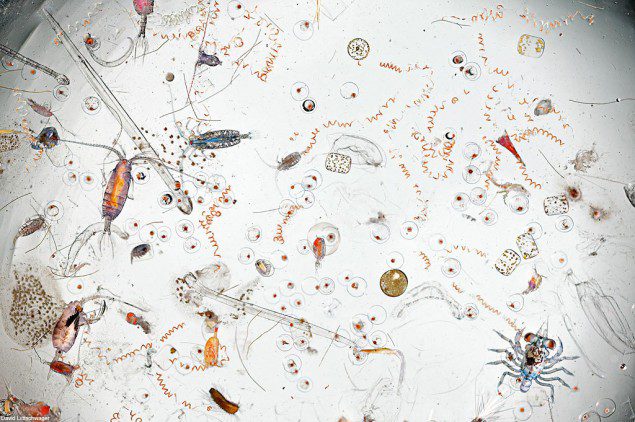
water-635x422.jpg


This is from a single drop of seawater......do not open your mouth 😀
 
On the face of it..... Yuck.... 😉 Most revealing.

I wonder what the magnification was for seeing those critters ?
I wonder, as a comparison, what one would see in a fresh water sample ?
 
I am at a "wait and see" point. I only have my boat a few weeks and I never used salt water on any previous boat. But, with only 30 gallons of fresh water, I would rather not use that up. I will wait and see if it starts to stink. If it stinks, I'll convert. Otherwise, it stays. Many people use salt water flush. Maybe some occasional bleach or some type of head treatment stuff?
Good point about a fresh water sample. I wonder?? 😉
 
pugtug13:

I believe you've already reviewed this... http://www.tugnuts.com/viewtopic.php?f=2&t=4861&p=35384&hilit=fresh+water#p35384

...a snippet... from the above ref.

I tend to lean toward fresh water for following reasons

-fresh water does not cause long term erosion of fittings
-fresh water does not cause internal pipe residue build up
-fresh water does not smell even if small amounts remain in the system for extended periods
-easier installation as it can tap into the under sink cold water line
-less expensive (by about $100) as it can make use of existing fresh water pump

The down side for using fresh water

-fresh water tank capacity is only 30 gallons
-excessive use of fresh water will limit cruise distances and exhaust fresh water for other purposes

Other considerations

-a quick fresh water flush uses a little over a pint
-an estimate for two people using head for one day would be 2.5 gallons (comments on this estimate are welcomed)
-if fresh water exhausted head still can be used by filling bowl with salt water
 
pugtug613":1s20lemy said:
I am at a "wait and see" point. I only have my boat a few weeks and I never used salt water on any previous boat. But, with only 30 gallons of fresh water, I would rather not use that up. I will wait and see if it starts to stink. If it stinks, I'll convert. Otherwise, it stays. Many people use salt water flush. Maybe some occasional bleach or some type of head treatment stuff?
Good point about a fresh water sample. I wonder?? 😉

If an odor problem is your main concern you can build a homemade vent filter for about $30.00. I made this last Summer and it completely eliminated all odors.
viewtopic.php?f=5&t=3921&p=29936&hilit=Waste+tank+filter#p29936
 
We used salt water flush on our 27. I never noticed a problem with odor except when with a following wind, we got a whiff from the vent. I think fresh or salt that would cause a stink. Maybe it was because my ___does not stink. (NOT).

Seriously, we always used plenty of water to flush...do not skimp.

After pump out, always put about 3 gallons of water into the tank. This helps prevent the solids from building up in a spot and causing a dam that never gets pumped out.

We find that with normal use we can go a week before pumping out.

The head on our 31 is a step above others we have used. It is very stingy with water for liquids flushing and adequate for solids.

I worried about having enough water also, but find that should not be a problem, at least on the 31. I share your concern about having only 30 gallons fresh water on the 25.
 
Quite honestly the 30 gal capacity for the fresh water is only likely to be an issue if you're away from land/marina for several days (maybe 7 at most). If that's not the case filling up with fresh water can easily be done between short 3-4 days away from land based water facilities.

We decided from the start we would never drink water from the fresh water tank so using it for the toilet was a no-brainer for us.

We use the fresh water tank for washing dishes and shower.

We carry/stow large water bottles with us for drinking and cooking. With two of us, plus two small dogs we get by using no more than 2 gallons per day and 3 gallons would be the absolute usage. So if we happened to be away from land for say 7 days we would simply have some 15x 1 gallon bottles of fresh water on board at the start.

So my point is, that not using the 30 gallon fresh water tank for daily drinking/cooking use is really not a problem for us unless we are away from land longer than 7 days. Obviously, this works for us and others with different cruising plans may not find this acceptable.
 
Why not use the fresh water tank for drinking? Thats what it was designed for. In the spring I flush out the antifreeze well, using a bit of extra disinfectant as I do so. Then fill with dock water, which is chlorinated, city water, and I am good to go.

The more you use the system the fresher it stays.
 
I will admit, we did try the fresh water tank for a very limited time at first. We are tea drinkers and for the first few cups of tea we made it was a very nasty tasting experience. 1st mate and I looked at each other in horror and it was then we decided on bottled water. The pre-boiling of water for the tea was some kind of assurance, but the taste was not something we could or wanted to accept.

My sister-in-law as a teenager traveled from NZ back to UK in a 'slow boat' of Italian make and during this voyage she picked up 'something' awful that to this day has been devastating to her bowels. It is something that seemingly has no cure. It puts her out of action for weeks at a time and whenever she travels she has a large bag filled with bottled pills to deal with the sudden 'flare ups' that come and go.

Each person's 'body' is different for sure, but 1st mate and I are not taking the risk of having the same issue as the sister-in-law.

I would add, that if I could actually service the fresh water tank easily I might change my mind some. Access and removal of the tank and fittings is simply not possible as a DIY project.

Have you ever left some water in a white bowl for several days (maybe 7 days) and then taken a look at the bowls surface the water is in contact with ? The surface becomes a faint pink color. From my readings the red or pink pigmented bacteria known as Serratia maecescens is thought to be the cause of the pink "stuff". While this may not be too harmful to humans, it surely lingers in a boat's fresh water system regardless of it's periodic thorough cleaning. A ref: http://voices.yahoo.com/danger-dogs-bowl-pink-crud-serratia-marcescens-12028141.html
 
I do not believe I need to write a book on this subject. However. We drink out of the fresh water tanks on our motor home and our boat. We sanitize the tanks at least once a year. Especially after sitting for a few months. The key is to use the water regularly keeping it fresh. City water systems usually have enough chlorine to kill most bacteria. What enters from the air as chlorine escapes and bacteria enter is another story.

That said, we use a Brita filter pitcher at home, on the boat and in the motor home. Just for the taste of it. When we cook or brush teeth etc. we use the tap.

An aside, we are still working on getting the taste of the pink stuff out of the new 31. To me it tastes like water from a green garden hose. We use the white hoses made for drinking water and filter the water going in to our tank.

By the way, the bacteria is unique to an area. The population acclimates to their bacteria. Travel exposes you to different bacteria. Which is why the people who live in Mexico do not get Montezuma's Revenge.

The water up here in the PNW is absolutely the best water in the country for boating or drinking.
 
Brian B":28sv76nv said:
Here's a few good reasons why not to drink the water.
http://themarineinstallersrant.blogspot ... -soup.html

Funny. I opted to not drink the tap water on TugBug because it tasted too much like a new plastic water tank. I hoped it would get to tasting better after it got broken in. After reading that article, I will never drink that water. I hadn't thought about the biological goo that could be setting up shop in that system.

Thanks everyone for the great subject!
 
This should be under a new topic about fresh water system use but, as often happens the conversation has wandered.

Everyone will make their own choice and believe the data they want. I am a geologist in the environmental field specializing in groundwater and water systems. I have over the years been brought in as a consultant to many private water systems where the wells and piping had gotten contaminated with bacteria. I bet you don't think twice about drinking your tap water at home.

Municipalities and public water systems are chlorinated and tested to check for this. Most private homes in the country are not. My point is that any system can become contaminated. By keeping my system flushed through regular use, and filling with chlorinated municipal water at the marina I can keep my system fresh and healthy.

I am careful about using my own hose if possible and letting the water run for a while before filling the tank. I have observed people adding fresh water to the waste holding tank after pumping out and putting the hose into the suction port on the boat. I can't understand why anyone would waste the time and water to do this, as whatever is left in the tank will get pumped out next time, but more importantly contaminating the end of the hose is just rude and disgusting. If I have to use a hose other than my own white, dedicated, drinking water hose, which would be rare, I clean the end and flush it real good before directing it into my tank.
 
On my last boat, I installed a "Sea Gull" type of filter. I picked it up at a boat show. It was great! I drank the water and cooked with he water. I may do that on my R27, for now it's bottled water.
Chester
 
Back
Top