Heat shield for engine hatch

Crewdog

Well-known member
Joined
Jun 2, 2012
Messages
519
Fluid Motion Model
C-28
Vessel Name
Blue Merle
MMSI Number
367556050
I'd noticed that the hatch insulation over the turbocharger on the Yanmar 4BY2-180 in our R-27 was charred, and after consulting with Lamb's Yacht Center in Jacksonville service dept, we decided to fabricate an aluminum heat shield to prevent any fires from inadvertent contact of insulation with turbocharger.


(click on image for larger picture)

Adhesive on other parts of the hatch insulation seemed ok, but the cutout over the turbo was contacting and had a burn spot.

A shout-out for Lamb's Yacht Center, a Yanmar certified dealer, and all round good guys.
 
Hey Bill,

How many hours do you have on the engine? I have noticed my insulation getting a bit scorched as well. According to the periodic maintenance schedule the turbo heat shield should be replaced every 250 hours. I am at 1,200 hours. I am wondering if your fix is a good alternative or if the shield should be replaced. It looks like there is an asbestos type material under the metal shield. When I review the detailed parts schematic there is no mention of the material under the shield so I can't figure what replacing the metal shield accomplishes. Unless the asbestos type material is attached to the shield. More investigative work!

Mike
 
Hi Mike:

Got about 380 hours on the engine, and this problem has been aggravating over the last couple of years.

I'm waiting on a call back from Yanmar US about what heat shield is constructed of, but it would seem logical to assume that any physical contact of insulation material with turbocharger heat shield would be a hazard.

I checked the aluminum heat shield on the hatch cover after a two hour high speed run over the weekend, and while warm to the touch, it was nowhere near enough to char the insulation.

Maybe the turbo heat shield has some sort of space shuttle heat tile material underneath? Will re-post when Yanmar calls back.

Bill
 
This seems pretty much a universal problem with R27 + the Yanmar 180 engine. It occurs because there is not enough clearance between the turbo and the hatch insulation. It is an installation issue not an hours on the engine issue. My solution was to attach an "Oatey Flame Protector". The protector is made for use by plumbers when soldering with a propane torch. The heat shield is effective up to 2500 F. Plumbers place the protector between the fitting being soldered and the wooden structure of the building. The purpose is to reduce the chance of setting fire to the wooden structure. On my boat I used aluminum duct tape to tape the material to the aluminum foil covering of the insulation.
 
In building my airplane, I used a KEVLAR HEAT SHIELD from Aircraft Spruce to protect the fiberglass cowling from the heat of the exhaust manifolds and tubing. Very thin and flexible stuff. Easy to cut to desired shape. Used aluminum tape to hold in position.
Product Features:
+. Protect engines components
+. Continuous heat up to 1100 degrees F
+. Reflects 90% of radiant heat up to 3000 degrees F.
+. Size: 26" x 40" Sheet
About $110 per sheet plus tax and shipping.
 
I'd like to bring this topic back up to ask if anyone found out anything other then what is posted here regarding having a heat shield or replacing a heat shield on the 4BY2 Yanmar on the R27's.

Jim F
 
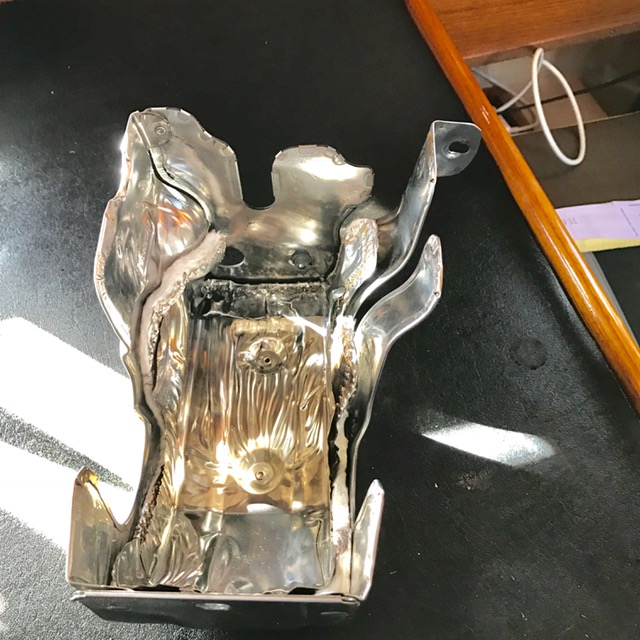
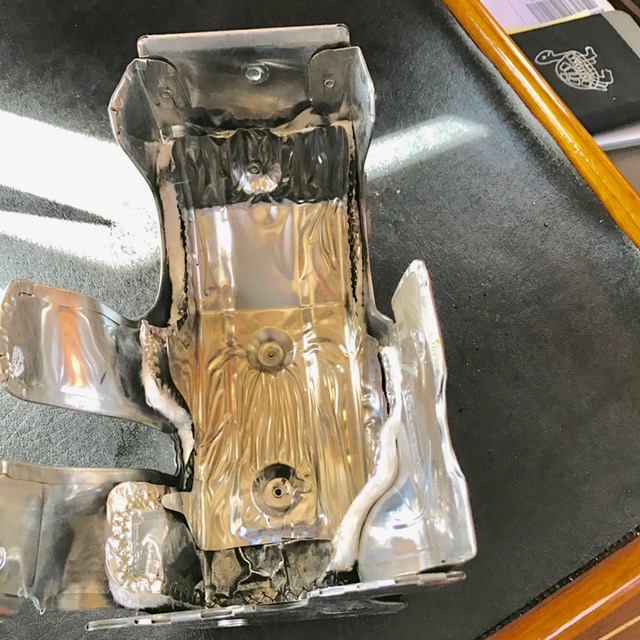
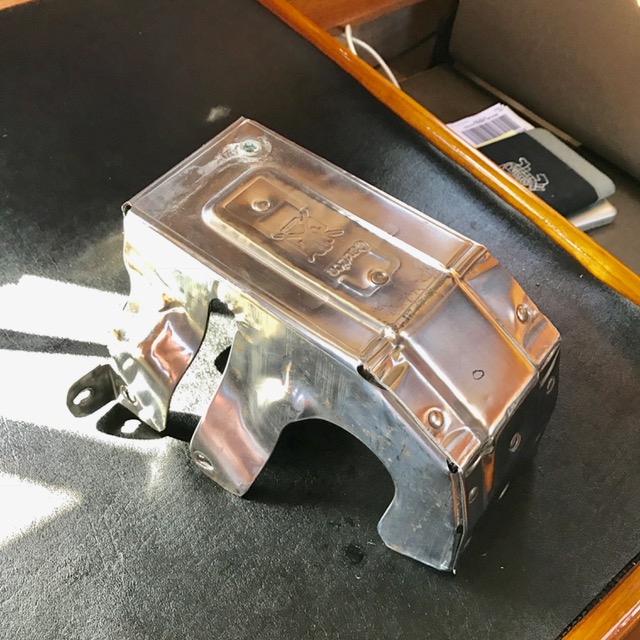
I was able to dismantle the stainless turbo heat shield on our 2012 Yanmar 4BY2. As you can see from the photo's there is an insulated heat shield mounted inside of the metal shield. The owners manual states that this should be changed once per year or every 250 hours. It appeared to be like new in my case but we don't travel fast enough to activate the turbo for long stretches of time, mostly at the end of a days cruise for a few minutes. For those that have this shield and use your turbo it may be worth an inspection.

turboshield1.jpg

turboshield2.jpg

turboshield3.jpg
 
Back
Top