R25SC

Captharv

Member
Joined
May 5, 2022
Messages
13
Fluid Motion Model
C-24 C
Non-Fluid Motion Model
Bayliner 2001 2452XC
Vessel Name
Playpen
I am new here, contemplating the purchase of an older--read-Diesel-- ranger 25. I am experienced in boating, and have owned 123 boats, but not a ranger tug, and not a diesel. I am handy with tools and mechanics and am a retired electronics nerd. In n55 years of owning boats, I have been towed only three times with engine problems. I have some questions. I am 75 and this would be our last boat.. All I ask is to be truthful.

Is the engine raw or sea water cooled?
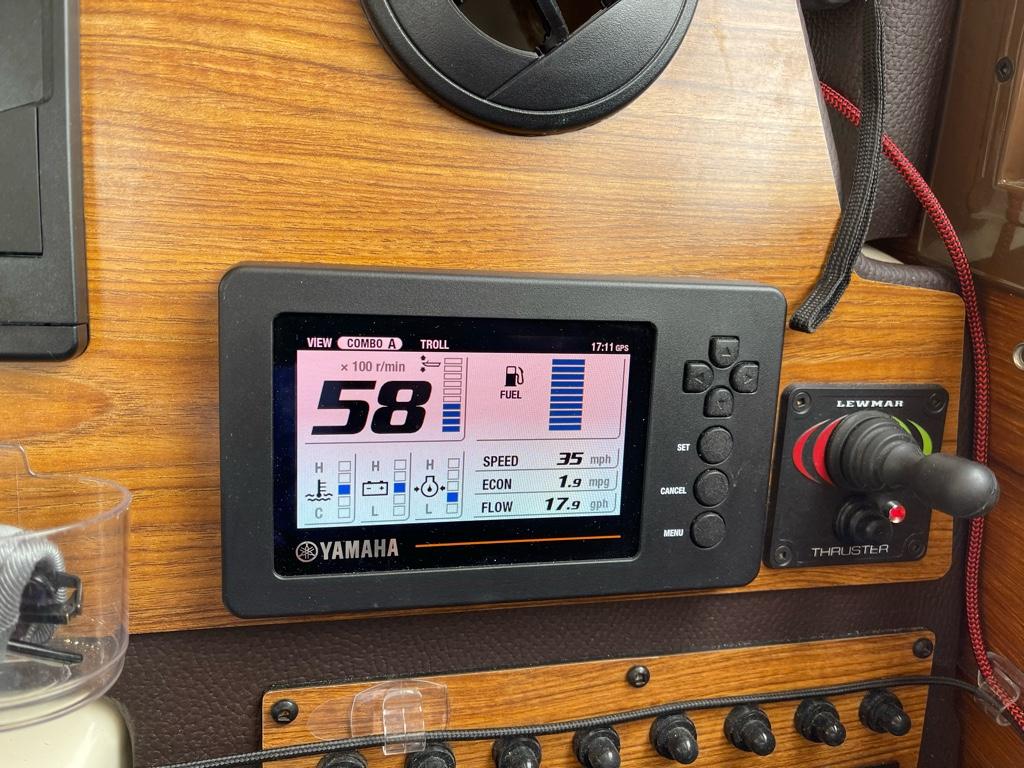
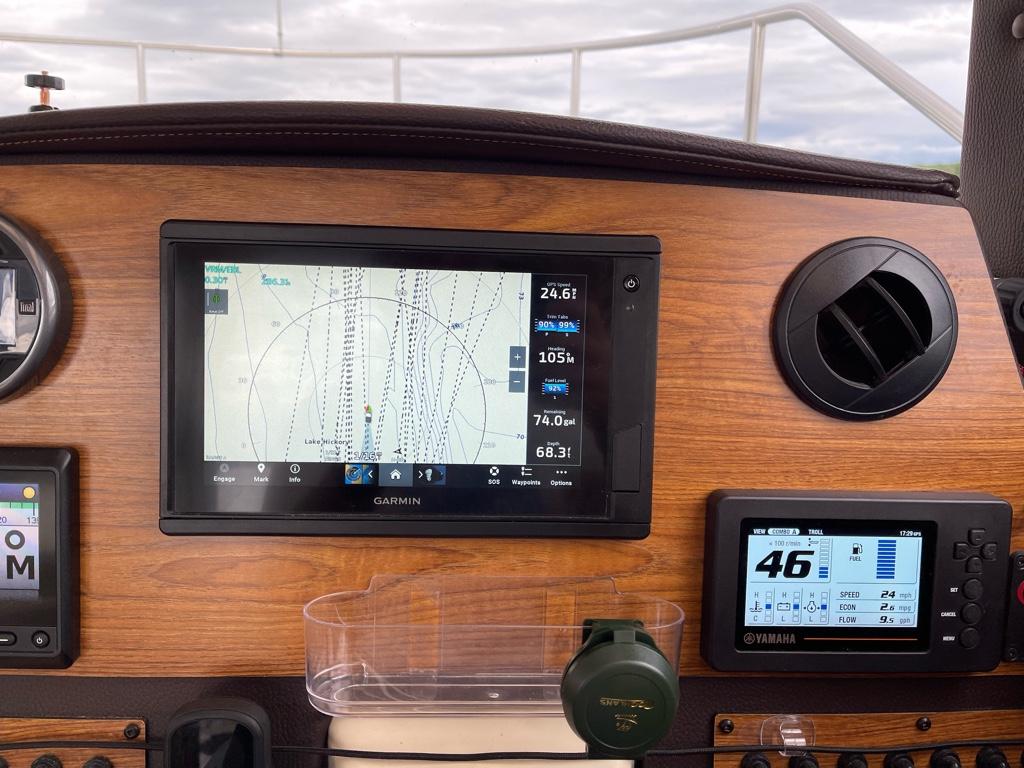
If you want to get somewhere fast, like trying to beat out weather, what's the fastest speed you can run for maybe and hour or two? I fully understand there is something in the manual about continuous and intermittent "red lines".
The articles/factory specs, etc show three engines: the MercCruiser, Volvo and the Yanmar. Which one seems to be the best and/or quietist? I have a hearing problem where the higher frequencies are gone. Lower frequency sounds, such as a car window open at highway speeds are deafening to me.
Speaking of sounds, can a normal hearing person hear outside sounds while in the cabin, underway?
When sleeping in the front berth, does the bow drop down where the boat lists forward? (Note: we are not exactly small people.)
Would filling up with diesel at the "corner filling station" be legal or harmful to the engine? I understand there are different formulae for marine and vehicle, or so is said... Some of the cruises I do are anchor outs with NO diesel available while on the water. And beside being less expansive.
 
The diesel engines are a closed system for cooling. The raw water is for cooling the heat exchanger.

No problem using diesel from the gas station.

With the cabin door closed the engine noise is reduced considerably. However, I would suggest taking a ride on one and determine if the hearing is an issue or not.

I never had a problem getting fuel on the water. Unfortunately diesel has gotten more expensive at the gas stations than gas.

Never had an issue with the bow lowering while in the v-berth.

Speed can vary depending on how loaded you are, hull cleanliness, wind and current as well as sea conditions. I always picked my days and watched the weather and made sure I was never far away from refuge.

I personally would prefer the Yanmar 150 HP. You could do approximately 12 MPH. In my opinion, Yanmar has better service coverage and parts are less expensive and more readily available. The engine is a marinized BMW, hence you can often get replacement parts less expensively via BMW.

If you are working on the boat yourself you need to be agile and in some cases have long arms. Keep in mind that these boats are packed with many systems that require periodic maintenance and repairs. Sometimes you need to remove items not needing service to get to the one that does need it.
 
Although I am 75, I am only 5-7 and have gotten into small spaces to service equipment. My present boat is also packed with different stuff and I am fully experienced. However, in some cases, I get my friends son, who is 6'6 and skinny to reach some of the shall we say, covert items...
I have a 21 yr old boat; a 19 yr old expedition, and a 2010 Camry all that run like new, and my expy is my tow vehicle. I do maintenance regularly. I would rather do an hour of maint than have to do a 2 hr on-water repair. or get towed)
A little thing about me which I did not mention. I was in the Coast Guard Auxiliary for 26 years. Until Towboat US and sea tow made an appearance in the 1990s, we (I) was on call for lost boats, disabled ones and people with medical problems. It was mostly protecting boaters from themselves. I assisted 256 boaters I did paperwork on. So, my boat had to run when needed. That's the level of maintenance I do on everything I have. That's me.
Getting diesel. On the St. Johns river The first diesel pump is in Sanford. The next one is in Palatka. A good 50 miles. I launch midway between them. That's why I asked.
Thanks for all the advice. I read it over 3 times and agree. Finding someone in my area to give me a demo ride is difficult. Much of the boat scene here in central Florida is trailer boating. I walked many marinas in search with no results.
Thanks again.
Capt Harvey
 
This is my opinion after owning a Cutwater C26 for 5 years, 650 hours. I have done all the maintenance on the C26. This included all recommended maintenance, discovery maintenance and mechanical break down maintenance. I was 58 when we purchased the boat and 63 when I sold the boat. My biggest complaint was the accessibility to get to components without using words that are not politically correct. The work can be done but requires some thought as to what is the best way to get at it!

Power plants ? This is my opinion The best power plant installed in the Ranger R25SC is the Volvo D3 150hp, 2.4 L, 5 cylinder. This engine can be rated to 220hp @ 4000 rpm ( I owned the 220hp D3) I like displacement and I like diesel engines that operate @ WOT in the 3000 rpm range not 4000 rpm range. The Cummins and Yanmar are 4000 rpm engines and rated to operate continuously at 90% of WOT RPM. Honestly I think the D3 150 HP can be run WOT all day long max rpm of 3000rpm. It is the same engine as the 200HP and 220 hp that turn 4000rpm the only difference is in the ECM programing. The D3 Volvo has the largest displacement of all diesels that Ranger installed in their 25', 27' Rangers and C26. The parts availability is about equal when comparing the Yanmar and Volvo. I owned the Volvo D3 for 5 years and never had a parts issue except for once when I was in Canada. The issue was Customs!!! I now own a pair of Yanmar 4LHA-STP 4 cylinder diesels and find that some parts are cheaper than the Volvo and some are more expensive. The availability is about the same at least for the $4000.00 worth of service parts I have purchased doing recommended service maintenance this year on the Yanmars. ( The boat I own now is larger and much easier access the engines and components. I believe that regardless of the power plant installed in the boat Cummins, Yanmar, or Volvo if properly maintained and hours under 2000 hours you will have several years of service out of the engines.

All three engines are fresh water cooled. Many of the raw water cooling components are made of dissimilar metals so flushing and maintenance is required to maintain a good operating cooling system. The Yanmar and Cummins have anodes that require replacement. The Volvo does not because of the use of similar metals for cooling tubes and exchanger housings.

Noise levels are about the same between the Yanmar and Volvo. I have never been on board a R25 with a Cummins while under way. The Volvo may have a slightly high turbo noise because of the VGT turbo compared to the waste gate turbo used in the Yanmar. This is something you just get use to. When cruising in and out of the marina I have had folks ask me is the engine Running? It is quiet at low rpm.

The boat actually floats level with weight forward if normally loaded. in my opinion all the Rangers and Cutwaters are stern heavy so they list to the aft.

You can fill up at the truck stop of filling station on the road if you like. Make sure you are not putting Ultra low sulfur fuel in the tank this will damage the engine. Just make sure it is with in the requirements of this Volvo service bulletin https://www.google.com/url?sa=t&rct=j&q ... yNdBQg8NKc The bulletin is for commercial engines but I believe if followed you should not have a problem with fuel.

If your goal is to do some economical comfortable cruising in a Pocket trawler. The R25 will work. It is only 25' so there are limitations. Some don't notice them some do. We cruised for 4 years in our C26 and never found limitations for 3 or 4 week cruises. The 5th year we cruised for 3 months took a 4 week break and then cruised for 3 more months. We decided we exceeded our limitations and sold the C26 for a larger boat. Its all about what your limitations are!
 
Thanks. The "gas station" fuel I mentioned was about the low sulfur thing.
My primary goal is the interior space and storage. I downloaded an owners manual and it shows what I want to see. However, the on the water is what it don't.
The comment re: lists to the bow" is in my present boat, it had a cutaway bow where it enters into the water. With our weights, it lists to the bow. The manufacturer did not install cockpit drains or bilge pumps tp compensate. Also the storage is not really good for long weekend overnighting. I see in the manual that the ranger does.
Thanks again,
Capt Harvey
 
Capt. Harvey

I agree with what most have said. I cannot stress enough the tightness of trying to fix things. My boat has had many problems over the 6 years I have owned her, so I have been in and out of almost every area. Some places I just can’t do so I hire a mechanic and they are not very happy with the job but like the $125 to $155 an hour I pay them.

Overall I like the RT25SC a lot and have been willing to spend the money to get it to where it needs to be for my use. As far as on water use the only negative I have found is the bow tends to dig in during following seas. Head seas are its strength and I have not been in a boat that size the takes them as well. The cabin for sitting reading a book, etc. can be uncomfortable for me after a while so I lay down on the V berth to read. Outside of those two things it is the perfect boat for my wife and I.

Good luck in your decision.

Dick

P.S. the price for diesel in MD is $7.09/ gal maybe rethink diesel power
 
We had a R25SC with the Volvo D-3 150 that we used for 6 summer seasons before ordering our R29S. We kept the boat stored on a trailer and the bottom was super clean and unpainted. At 80% of 3000 RPM (2400 RPM )we cruised at 13 MPH when the fuel tank was full and as we got closer to a half tank the mileage increased to 14 MPH. Our top speed was 18 to 19 MPH depending on the fuel load. We felt we could easily drive for hours at 15 or 16 miles per hour without stressing the engine.
Of course Brian's comments about the same engine with different electronics running at 4000 RPM means we probably could have safely run her wide open all day (80% of 4000 RPM is 3200 RPM and the 150hp version wide open runs at 3000 RPM). We never did that. The newer versions of the diesel R25, the R25SC, has the engine completely out of the cabin so with the back door closed we found it extremely quiet. We often left the door open and still did not find the noise a problem, especially for canal or hull speed cruising. The Volvo D-3 with its 5 little cylinders idles so smoothly that sometimes I looked at the tach to find out if she was running. The biggest difference I notice immediately with our R29 (other than the bigger space) is the larger engine with only 4 cylinders does not purr as quietly at idle and very slow speeds. I don't know about at your marinas, or what this summer will bring here in the Great Lakes, but I found that diesel fuel was actually less expense at the marinas because it did not have the highway taxes on it.
The R25SC was great little boat, the 6th new boat we purchased in our 40 years of boat purchases, and we had no issues with her, we just always wanted a bigger beam boat and thought the time was right before we got too old to trailer a wide load.
 
I find that at 6 mph I burn 1 gallon per hour. Slow down and smell the sea breeze.Being an old rag bag sailor I find six just right. If you can't afford diesel at a gallon per hour you can't afford boating. :mrgreen:
 
I have a question about the ultra low sulfur diesel. I don't know if its law but the stations around here only carry the ultra low sulfur fuel. How is using that going to damage the engine? Is there an additive that one can use to mitigate the negative effects. For me its like a 10 mile run to the marina that sells diesel fuel. A run I don't often make. I generally just put 5 gallon in now and then from the truck pump. Its all ULSD. Nothing has blown up yet. I do add some power service additive for lubricity only because JD advises I use that in my tractor engine. This is the first I've heard of not using the ULSD. I thought it was greener. Would a newer style engine not be set up to run greener fuel?
 
Mr Ben":22m7dad4 said:
I have a question about the ultra low sulfur diesel. I don't know if its law but the stations around here only carry the ultra low sulfur fuel. How is using that going to damage the engine? Is there an additive that one can use to mitigate the negative effects. For me its like a 10 mile run to the marina that sells diesel fuel. A run I don't often make. I generally just put 5 gallon in now and then from the truck pump. Its all ULSD. Nothing has blown up yet. I do add some power service additive for lubricity only because JD advises I use that in my tractor engine. This is the first I've heard of not using the ULSD. I thought it was greener. Would a newer style engine not be set up to run greener fuel?

For the most part, no matter if you get fuel on the water or at a land base filling station the sulfur content in the fuel is low. Years ago it was 3000PPM now I think it is regulated to be 15PPM or lower. I believe as long as you are adding a additive that contains some type of chemical that adds lubricity you will be ok. Most marine fuels or off road fuels have slightly higher sulphur but still most be at 15ppm or lower.Most marine fuels have additives added to help with lubricity and Cetain. The information that I have read is that ultra is 97% less sulphur than low sulphur fuel. If you read the service bulletin there was no requirement for to low of sulphur, it is too high of sulphur. So to your question. Is the ultra going to damage your engine? Probably not. Your John Deere rep did recommend using an additive for a reason. Lubrication is the main source of reducing wear in an engine. Any time there is a reduction in lubrication there is the possibility of added friction which causes wear. This is my opinion, I'm not an engineer. I'm just using my personal judgement. Right or wrong.
 
If I were to buy another Ranger Tug I would buy an outboard. Get the benefit of 100’s of thousands of units manufactured into relatively trouble free power plants. More time cruising less time fixing…Just saying

Swims with Tuna RT25sc
 
I’ll like the outboard for its ease of maintenance and economy.
3e4ad951071951fb0e5998d024f08c2c.jpg

89514117a89e86cd54ba3172fc167652.jpg


Sent from my iPhone using Tapatalk
 
Just my opinion and its free. One of the reasons I bought the boat I did when I did is RT was switching to outboard. I bought a 2016 25SC with the Volvo D3 150. My thought was anytime a quality product is discontinued do to market forces the old quality product should retain some demand and thus hold its value compared to other product. I also felt there is something morally wrong hanging an outboard on the back of one of these boats. I do see the value now, but when making my purchase I did not. I have nothing against outboards. I own 2. I have owned an outboard for 50 some years. I was a certified outboard mechanic in the late early 80's. No longer valid. I have also replaced 2 200 plus HP outboards. They were 20k plus. The outboard raw water circulates throughout the engine. In salt water many times you simply cannot get them apart. You drive past any boat yard/repair facility in S Florida and there are mountians of outboard engine blocks. Maybe not today with the price of scrap today but often enough. Those motors failed and are not repairable due to salt water intrusion. You gain storage but you loose swim platform. You now carry gas on board in large quantity which was always considered a negative. There are lots of pros and cons. To each his own. I may own one someday. I do enjoy rumbling along feeling that little 5 cylinder diesel humming along under my feet.
 
Back
Top