Battery Charger

Steadfast

Well-known member
Joined
Feb 21, 2016
Messages
59
Fluid Motion Model
C-248 C
Vessel Name
STEADFAST
Novice question, I know.


When you're out and underway, should the battery charger switch be turned "ON"? I assume no. The charger only functions when you're connected to shore power.


Thank you for your time and comments.

Brian
 
You are correct. When you are underway the engine's alternator takes care of charging the batteries.
 
My follow up comment.

I've had the boat at a mooring and went on a short trip yesterday (30 minute travel time, slow speed, low RPM's)

Hooked up to a mooring for 5-6 hours and maybe had the refrigerator going for about 3 hours.

Went to start the boat and nothing....had to get towed. The battery bank read about 12.5 volts. I have a memory that the batteries should be 14 volts??

At first I thought it was a problem with the Volvo fob system but now I suspect it was just a "dead" battery?

Any thoughts?
 
Always turn off your engine battery when at anchor!
 
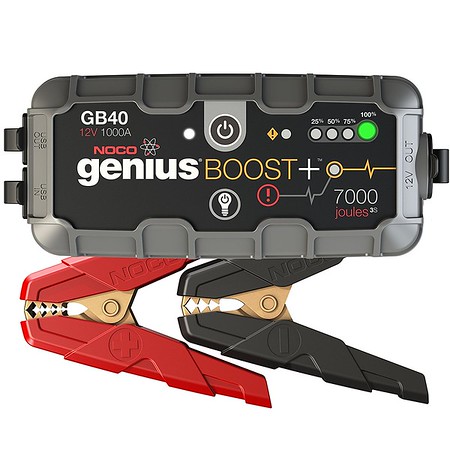
I keep an emergency lithium battery with me. This battery is strong enough to start my diesel truck without internal batteries connected and has no issue to do the same with the d3-200
The battery is light enough to be carried around and sturdy to perform this task. Holds charges for a really long time and is made by noco model gb150

Makes a difference between waiting for a tow and enjoying your trip. But then we all know the definition of cruising which is fixing your boat in exotic locations
 
A few observations about 12V Batteries.

A 12V battery at rest will read 12.6V to 12.7V (At rest means no charger and nothing drawing current)
A 12V battery at maximum charge rate will show 14.2 to 14.6 depending on battery type
A 12V battery at full charge connected to a charger will show abut 13.2 (float charge)

So from your post if your battery bank was showing 12.5V then it was indicating that that bank was about 80% charged. Maybe you were looking at the house bank? I am not sure of your boat's battery system but you probably have 3 banks? One for house, one for start, and one for thrusters? Maybe you had a dead start battery? Do you have a parallel switch on your boat? If you do then you may have been able to turn on the parallel switch and temporarily use all of your boat's batteries to start your engine. It is also possible that your boat's charging system is not working properly (alternator, solenoid, etc etc). How old are the batteries? Running the fridge for 3 hours would not have caused your start battery to run down unless the parallel switch was turned on but then the voltmeter was showing 12.5 so I'm not sure what was going on.
 
Hi

I did have the parallel switch was turned on....I know it should always be turned off.....I had it on while I was trouble shooting my inverter....and just left it on.

I do have four battery switches....

1. Engine
2. House
3. Thrusters?
4 . Parallel

Maybe not in the correct order.

If you are at a mooring...and running the refrigerator for hours, it will only run down the house battery and not affect the engine battery?

Thank you
 
That is correct, the different banks are isolated for this exact reason -- you can run the house bank down but not affect the battery bank (unless you have the parallel switch on). You only want to use the parallel switch for starting and always best to have it off obviously). Another thing worth learning about is the switch by the voltmeter -- by toggling this switch to the three different positions you can check the state of charge of each of the banks (house, start, thruster). But... from your description (that is parallel switch on, and 12.5 voltmeter reading) you still should have been able to turn over your engine. Did the engine turn over at all or did you hear clicking sounds?
 
Hi

Thanks for the great info. I can look at three different volt levels. I think they all said about 12.5.

I know I have four power switches...I assume one switch for each battery? I have to count the batteries again!

If I have four batteries, I wonder why I can only check the voltage for three banks? I'm assuming one bank for each battery? I'm probably incorrect!

No noise when I went to start. The fob usually causes a beep and a green light comes on the Volvo panel and then I push the start button. I did make sure the boat was in manual and I attempted with two different key fobs.

Brian

Also...I had the parallel switch turned on for the last two weeks or so.
 
Hey Brian, you are close!
You have 4 switches:
One house which will controls (either on or off) all of your house batteries allowing you to use the lights, head etc.
One engine switch will controls your start battery
One thruster switch which controls the thruster battery
One parallel switch which links all of the batteries together (used just for starting usually).
You have three battery banks (house, start, thrusters)
From your description of all three banks being at 12.5v then it likely is not a battery issue. If the ignition light didn't come on when you pressed it with the beep then the start stop switch won't work either (I think). I'm thinking this is where you need someone who knows this situation better than I do!
 
Steadfast":2fjf43bd said:
When you're out and underway, should the battery charger switch be turned "ON"? I assume no.
The battery charger is powered by the A/C bus. When you’re out and underway, the A/C bus is not powered unless the inverter is being used. So having the battery charger switch selected ON does nothing. If you plan to use the inverter, the battery charger most certainly should be selected OFF.

As others have already said, when out cruising, the alternator on the engine is charging the batteries.

Don’t worry about novice questions. I’ve had my 2012 R27 just over a year, it’s my first boat with complex systems and I’m still asking novice questions. Better stupid questions than stupid mistakes.
 
Based on what you said though, I am not sure why you could not start your engine. If you read 12.5 volts from your house bank and you put your parallel switch on then the engine should have cranked. If you had 12.5 volts in your engine battery, it should have cranked. Perhaps the 12.5 volts was your thruster battery? To the best of my knowledge, that is not connected to the parallel switch and hence would not start the engine if you had the parallel on and both house and engine were drawn down.
 
So....one more view.

I think if you left the parallel battery switch in the ON position for two weeks, all of the batteries would settle at the same level of charge. By keeping it in the OFF position, you have the ability to draw on the other batteries for a start when needed.

I am not sure what the engine needs to start and I would have thought 12.5v would be sufficient, but worth a look in the book for that one.

One tip I had a few years ago for a smaller boat, was to have available a portable battery charger for the purpose of giving your engine battery a boost to start the engine. I use mine at the start of the season when I know the single battery (on my pontoon boat) is low. Starts every time and is good for the season.

There are many on the market - here's what Amazon says is their best seller: https://amzn.to/2tXprbu

i-gqkxrHm-M.jpg


Of course, shore power is always a solution....

Good luck...hope your are back up and running soon!
 
Just because amazon says it is their best seller does not mean it is suitable for the application. For a Diesel engine you need one of the bigger models like the gb150
 
Fair point...the one below comes in larger capacity models; although, the one below is rated for a 3L Diesel engine....
 
Back
Top