
CaspersCruiser
Well-known member
- Joined
- May 11, 2016
- Messages
- 966
- Fluid Motion Model
- R-27 Classic
- Hull Identification Number
- FMLT2709G112
- Vessel Name
- Cookie
- MMSI Number
- 368203460
Summer is around the corner and soon there will be posts about how to make of the most of the air conditioning on our boats. On my 2012 R27 there are only two air conditioning vents and the duct work for the port side vent was partially crushed during assembly of my boat at the factory so I have to make the most of what conditioned air makes it to the cabin.
There are lots of pilots on Tugnuts and I’m sure they’re familiar with my solution to air conditioning happiness— reflective heat screens. They’re used in airplanes on the ground to mitigate cockpit solar heating and to protect electronics and upholstery from damaging direct sunlight.
As I did for my airplanes, I made my own heat screens for my boat. It took a while. There are a whole lot more windows on a Ranger Tug than on a small airplane!
To make my heat screens, I used Reflectix brand reflective bubble insulation I bought at Lowe’s:
https://www.reflectixinc.com/products/d ... nsulation/
I used this type of Velcro. It comes in black or white. I used black on the window frames and white on the overhead hatch frames:
https://www.velcro.com/products/industr ... olor=black
I used newspaper sheets to make patterns of the window and hatch frames, traced those onto the Reflectix and cut it with scissors. I cut the nap side of the black Velcro strips in half to make them 1/2” wide. It fits the window frame perfectly. For the overhead hatches, I used the Velcro full width. On the heat screens, I used the full width of the Velcro hook side strip.
Here’s what they look like installed:
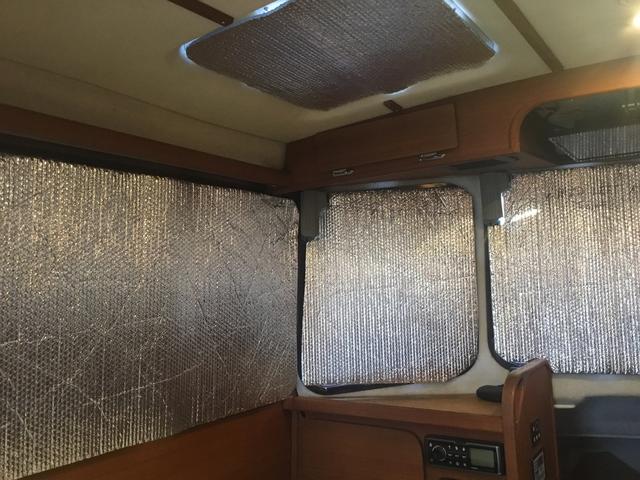
I used my heat screens all last summer and they’re very effective. When we’re using the A/C, we only put screens in the windows that are facing the sun and on the overhead hatches. As the day progresses, we put up and take down the screens as the sun moves around the boat. When the boat is not occupied, we put up all the screens. They keep the interior temperature within about 20° of the outside temperature and keep prying eyes from seeing what’s in the boat. At night we use the screens for privacy.
On the cabin door, we use the canvas screen that came with the boat.
The downside to these screens is storing them when they’re not in use. We put the smaller screens inside the two largest and fold them over and put them in the cave under the table.
There are lots of pilots on Tugnuts and I’m sure they’re familiar with my solution to air conditioning happiness— reflective heat screens. They’re used in airplanes on the ground to mitigate cockpit solar heating and to protect electronics and upholstery from damaging direct sunlight.
As I did for my airplanes, I made my own heat screens for my boat. It took a while. There are a whole lot more windows on a Ranger Tug than on a small airplane!
To make my heat screens, I used Reflectix brand reflective bubble insulation I bought at Lowe’s:
https://www.reflectixinc.com/products/d ... nsulation/
I used this type of Velcro. It comes in black or white. I used black on the window frames and white on the overhead hatch frames:
https://www.velcro.com/products/industr ... olor=black
I used newspaper sheets to make patterns of the window and hatch frames, traced those onto the Reflectix and cut it with scissors. I cut the nap side of the black Velcro strips in half to make them 1/2” wide. It fits the window frame perfectly. For the overhead hatches, I used the Velcro full width. On the heat screens, I used the full width of the Velcro hook side strip.
Here’s what they look like installed:
I used my heat screens all last summer and they’re very effective. When we’re using the A/C, we only put screens in the windows that are facing the sun and on the overhead hatches. As the day progresses, we put up and take down the screens as the sun moves around the boat. When the boat is not occupied, we put up all the screens. They keep the interior temperature within about 20° of the outside temperature and keep prying eyes from seeing what’s in the boat. At night we use the screens for privacy.
On the cabin door, we use the canvas screen that came with the boat.
The downside to these screens is storing them when they’re not in use. We put the smaller screens inside the two largest and fold them over and put them in the cave under the table.