
CaspersCruiser
Well-known member
- Joined
- May 11, 2016
- Messages
- 943
- Fluid Motion Model
- R-27 Classic
- Hull Identification Number
- FMLT2709G112
- Vessel Name
- Cookie
- MMSI Number
- 368203460
Today, I was filling the fresh water tank on my 2012 R27 and the water pretty quickly backed up to the top of the filler neck and actually burped up several large gobs of water. I knew immediately that the fresh water vent was clogged. It’s the first time that’s happened since I bought the boat in April 2017.
I did a search of Tugnuts forum messages and found a couple remedies. One was to back flush the vent thru-hull with water. When I did that, it flushed a couple of small white insect larvae out one of the two vent holes. I knew then I was dealing with an insect nest and I had to remove the vent thru-hull.
Access to the fresh water vent line and thru-hull is made from inside the boat and the refrigerator has to be removed to get to it. There are several threads that detail removing the refrigerator so I’ll skip describing it here.
Once the refrigerator is removed, there’s fairly good access. There was a VHF radio coax cable zip tied to the vent line and thru-hull. Those have to be removed. Once they’re cut free, use a 15/16” wrench to remove the nut holding the thru-hull assembly to the side of the boat. Under the nut is a star washer and a concave flange that will be mildly stuck to the fiberglass. Don’t let that flange fall into the interior sidewall. I did, but thankfully it was caught on top of some hoses and cables. Dodged a bullet there. I thought it was glassed into place.
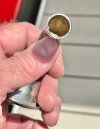
The close-up photo shows how completely a mud daubing insect blocked the thru-hull vent tube. I used a straight pick to break up the mud and then rinsed the tube completely with a hose nozzle set to “jet”.
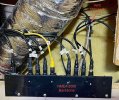
The wide view photo shows where the vent thru-hull is located at the back of the refrigerator cavity. It also is a good view of the location of the NMEA 2000 backbone.
The NMEA 2000 backbone on my boat is a lot neater than the factory installation. It has been modified to utilize two 4-port T-connectors instead of a bunch of individual connectors ganged together. That was a lengthy, ugly mess on my boat. I am going to post this picture in another thread to direct searches for folks searching in the future where the NMEA backbone is located on Classic tugs.
I did a search of Tugnuts forum messages and found a couple remedies. One was to back flush the vent thru-hull with water. When I did that, it flushed a couple of small white insect larvae out one of the two vent holes. I knew then I was dealing with an insect nest and I had to remove the vent thru-hull.
Access to the fresh water vent line and thru-hull is made from inside the boat and the refrigerator has to be removed to get to it. There are several threads that detail removing the refrigerator so I’ll skip describing it here.
Once the refrigerator is removed, there’s fairly good access. There was a VHF radio coax cable zip tied to the vent line and thru-hull. Those have to be removed. Once they’re cut free, use a 15/16” wrench to remove the nut holding the thru-hull assembly to the side of the boat. Under the nut is a star washer and a concave flange that will be mildly stuck to the fiberglass. Don’t let that flange fall into the interior sidewall. I did, but thankfully it was caught on top of some hoses and cables. Dodged a bullet there. I thought it was glassed into place.
The close-up photo shows how completely a mud daubing insect blocked the thru-hull vent tube. I used a straight pick to break up the mud and then rinsed the tube completely with a hose nozzle set to “jet”.
The wide view photo shows where the vent thru-hull is located at the back of the refrigerator cavity. It also is a good view of the location of the NMEA 2000 backbone.
The NMEA 2000 backbone on my boat is a lot neater than the factory installation. It has been modified to utilize two 4-port T-connectors instead of a bunch of individual connectors ganged together. That was a lengthy, ugly mess on my boat. I am going to post this picture in another thread to direct searches for folks searching in the future where the NMEA backbone is located on Classic tugs.
Attachments
Last edited: