Inverter use while under way

HRowland":2fiw4vow said:
Hi Herb,

Mike has a 2011 model R27 with a combined inverter/charger. My 2012 model R27 is like yours with a seperate charger and inverter. This is why we have a charger circuit breaker. I do not know what is used in more recent R27s.

Howard
When at my first Ranger Rendezvous Andrew actually rewired my pro-mariner and I seem to remember him saying, "now the charger will go on automatically on shore power and you don't need to use the breaker. So I am not sure if the unit has separate leads for the charger portion or I may have misunderstood Andrew.
 
I just had a quick chat with Andrew and he told me that Mike has a completely different Inverter/Battery Charger setup to what I have. He continued to say that my setup CANNOT be rewired to be like Mike's. The critical part of this aspect is that the Inverter/Battery Charger has to be a 'combination' Inverter/Charger model. So, I suspect those of us with separate Inverters and Battery Chargers would need to change over to having a 'combo' unit such as Mike has.

Andrew did confirm that my Battery Charger breaker should be OFF when using the Inverter while under way.

My Xantrex 1800|Pro Inverter was installed by the factory during out R-25's assembly, and if I recall was something that was added late 'in the game' so the opportunity to have a 'combo' Inverter/Charger' was not possible without a lot or de-installing and re-wiring.
 
I think the best solution to these problems is to split the AC bus

With the heavy loads feed directly via shore power/gen set
These would be the HW tank, battery charger, ice maker etc

And the 'light loads' supplied via the inverter such as micro wave, ac outlets #1, ac outlets #2 etc.

The advantages of this is

Inverter will never power the heavy loads

Impossible for inverter and Battery charger to be on at same time

Note: when plugged in to shore power/gen set the inverter acts as a simple pass through for the light loads (the actual inverter is out of the picture)

Other cautions when ruining inverter:

All Ac breakers off initially, turn on loads one at a time

Disconnect shore power if for some reason you want to invert or stated another way be sure inverter is off when connecting to shore power. Yes there is voltage sending in the inverter, that's not full proof as we found New Year's Eve a few years ago

Consider an AC ammeter to knyow what your ac loads are

Be aware of the efficiency of the inverter itself the quoted number of 80% is what I thought it would be
Real life experience on the Pro Mariner 2500 shows its worse based on actual ac and dx current measurement

Once I remember how to do it I will post a simplified AC Disgram showing how to split the bus.
 
Sorry, forgot to add, those with separate inverters and chargers DO NOT need to buy a a combo unit

The split bus method deals with this

To drive this point home, our old Catalina was wired so that the inverter supplied the ac outlets ONlY

All other loads (incl battery charger) could only be supplied from shore power/gen set.
 
FYI... I used my KILL A WATT device today while the Inverter was ON. I found it measures AC volts, Amperage and Watts but not AC frequency. I also plugged it into my portable 150 watt inverter which was connected to a Cig lighter receptacle and it displayed the same things AOK.
 
The 'Kill A Watt' sounds like a neat device. To see the effect of the pseudo sine wave inverter output it would be interesting to make measurements of the same load via the inverter vs via shore power.
 
Newtugnut: I did just that today...

Here's the portable Inverter I used which simply plugged into the Cig lighter receptacle.
1.jpg


2.jpg


Here's what the KILL A WATT displayed for volts off the portable inverter
Inverter%20volts.jpg


Here's what the portable inverter displayed for watts when I connected my 120v/USB adapter for charging my iPhone 5
Inverter%20watts.jpg


Here's what the KILL A WATT displayed for volts when Shore power was connected
Shore%20Power%20Volts.jpg


Here's what the KILL A WATT displayed for watts when Shore power was connected and with my 120v/USB adapter for charging my iPhone 5 connected
Shore%20Power%20watts.jpg


I also noted what the onboard Xantrex 1800|Pro inverter provided with Shore power off using the KILL A WATT plugged into my Galley 120v outlet. The KILL A WATT showed some 106 volts whereas the AC Analog meter at the helm was displaying 90volts... quite some discrepancy IMO.

Also, note that when using the portable inverter to charge my iPhone it was delivering just 3 watts of power whereas when doing the same thing with Shore power it was providing 6 watts of power to the iPhone. Obviously the Shore power will provide much faster charging for the iPhone.
 
Baz: These pictures and test results are most interesting. I did some simple calcs, and yes with the higher voltage more power is drawn. But from a simple check of P = V^2/Z Power equals Voltage Squared over Impedance, its clear the load is non-linear.

The portable inverter is probably throwing out harmonics, which makes IPad charging not efficient either.

It seems good old shore power that is pure sine wave is the way to go! or a gen set.

I'll bet the analogue volt meter is out - but that much out? Worth checking with a separate digital volt meter.

Sounds like our inverters are only good for making toast or running a blender 😀 😀
 
I charge my iPad and Droid phone from 12volts. Why convert DC to AC and then back to DC? As you have figured out, it is not very efficient.
 
baz":2ebu1h1z said:
Newtugnut: I did just that today...

Here's what the portable inverter displayed for watts when I connected my 120v/USB adapter for charging my iPhone 5
Inverter%20watts.jpg

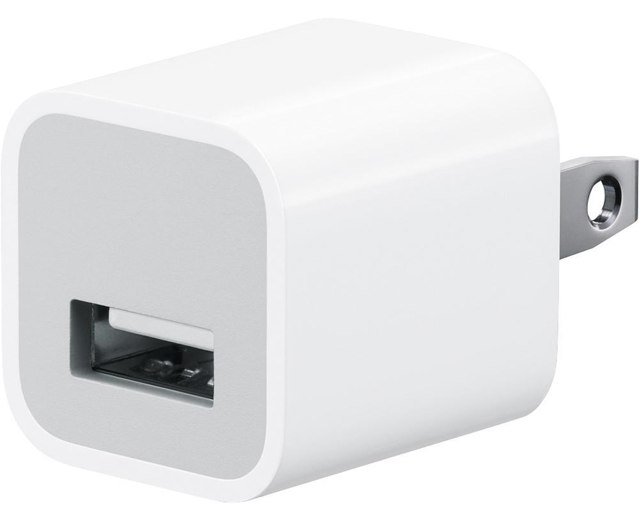
Try using the switching power supply based charger that shipped with your iPhone5.

221694178.jpg
 
I also have the Kill A Watt device which I obtained from Ace Hardare. In fact it DOES measure AC frequency. This is important when opeating the generator as it tells you whether or not the generator is turning the correct RPM. The AC frequency is directly related to the RPM of the generator.
 
Back
Top