BaseCampAnne
Well-known member
- Joined
- May 24, 2009
- Messages
- 258
- Fluid Motion Model
- C-288 C
- Hull Identification Number
- FMLT2916B313
- Non-Fluid Motion Model
- Eddyline Skylark, Mariner Coaster (kayaks)
- Vessel Name
- Cascadia
- MMSI Number
- 367604650
At tonight's Coast Guard Auxiliary navigation class we heard that each individual boat is unique and has a different deviation, so we should create our own deviation matrix based on 30 degree increments. Several instructors and students with Navy and Coast Guard backgrounds (I am in San Diego currently) had experience with that and spoke up. They also mentioned how their own boats vary and may be +3 degrees W at 30 degrees and can be -1 degree E at 60 degrees, etc.
This is new (and confounding) information to me, and along with checking set and drift every 30 minutes while in transit, seems to be a lot of work in our world of modern electronics, although possibly satisfying if becoming proficient.
Later we were practicing plotting a route to Catalina, and then a reciprocal route back. I had no idea there could be a difference in the return based on our own boat's deviation, which could have us going towards Ensenada and possibly missing San Diego.
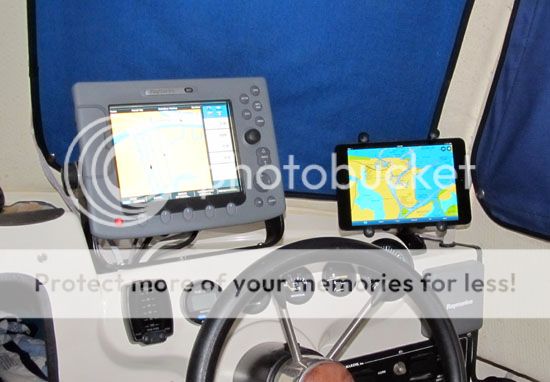
I feel like this is a parallel universe to using our Garmin or Raymarine chartplotters, but certainly not parallel in terms of effort :!: On the other hand, that might be premature, since I still have lots to learn about the Garmin system.
I carry paper charts and review them before a trip, but have not done this level of work. Now I wonder if other Tugnuts have created a deviation matrix, use it, and go through both ways of plotting a course each day when going to someplace new :roll:
Perhaps this is an introduction to one of the many areas of knowledge needed to head north to Alaska or south to Baja 😀
This is new (and confounding) information to me, and along with checking set and drift every 30 minutes while in transit, seems to be a lot of work in our world of modern electronics, although possibly satisfying if becoming proficient.
Later we were practicing plotting a route to Catalina, and then a reciprocal route back. I had no idea there could be a difference in the return based on our own boat's deviation, which could have us going towards Ensenada and possibly missing San Diego.
I feel like this is a parallel universe to using our Garmin or Raymarine chartplotters, but certainly not parallel in terms of effort :!: On the other hand, that might be premature, since I still have lots to learn about the Garmin system.
I carry paper charts and review them before a trip, but have not done this level of work. Now I wonder if other Tugnuts have created a deviation matrix, use it, and go through both ways of plotting a course each day when going to someplace new :roll:
Perhaps this is an introduction to one of the many areas of knowledge needed to head north to Alaska or south to Baja 😀