

Submariner
Channel Surfing
- Joined
- Feb 2, 2020
- Messages
- 1,869
- Location
- Everett, WA
- Website
- www.letsgochannelsurfing.com
- Fluid Motion Model
- R-27 (Outboard)
- Hull Identification Number
- FMLT2702C021
- Non-Fluid Motion Model
- https://tinyurl.com/yrv84xdm
- Vessel Name
- Channel Surfing
- MMSI Number
- 368187810
Disclosure: PowerTech sponsors our YouTube channel and I did the testing on the SCE5-15 Channel Surfing edition.
Our fuel economy dropped from 1.7+ mpg to 1.4 at cruise.
At WOT the engine hit 5,900 rpm at 33mph which caught my immediate attention.
It normally tops out at 5,700 rpm at 38mph.
Cruising speed was usually 4800 rpm, but had moved to 5300 rpm to maintain 28mph.
Higher RPM and lower speed means slip, a lot of slip. The power isn't making it into the water.
Totally unrelated, I had a PowerTech OFS5-15 prop to test on my boat. It actually performed better than I expected. Running the OFS5-15 showed me the engine was fine and the problem was in my SCE5-15 prop. I took off the prop, pressed out the Cushion-Lok hub and found black rubber rods were SHREDDED, some of them MELTED from heat. The blades were perfect, it ran smoothly with no vibration, and the hole shot was normal. I have at least 4 engine hours at cruising speeds running the boat this way.
Nothing felt wrong except the fuel burn.
What happened? Coming back from the Roche Harbor Rendezvous, we ran over a commercial fishing net at 28mph. That net slowed the boat down like a jet landing on an aircraft carrier when it grabs the tail hook. However, no fouling of the prop occurred, so after a brief stop we continued our journey home.
The change in data started that day. Coincidence? I can't prove this is what caused it, but it seems plausible. I think that the net grabbed the prop, slowing it down while the prop shaft kept turning under power which spun the hub, the net probably shredded, releasing the boat/prop clean.
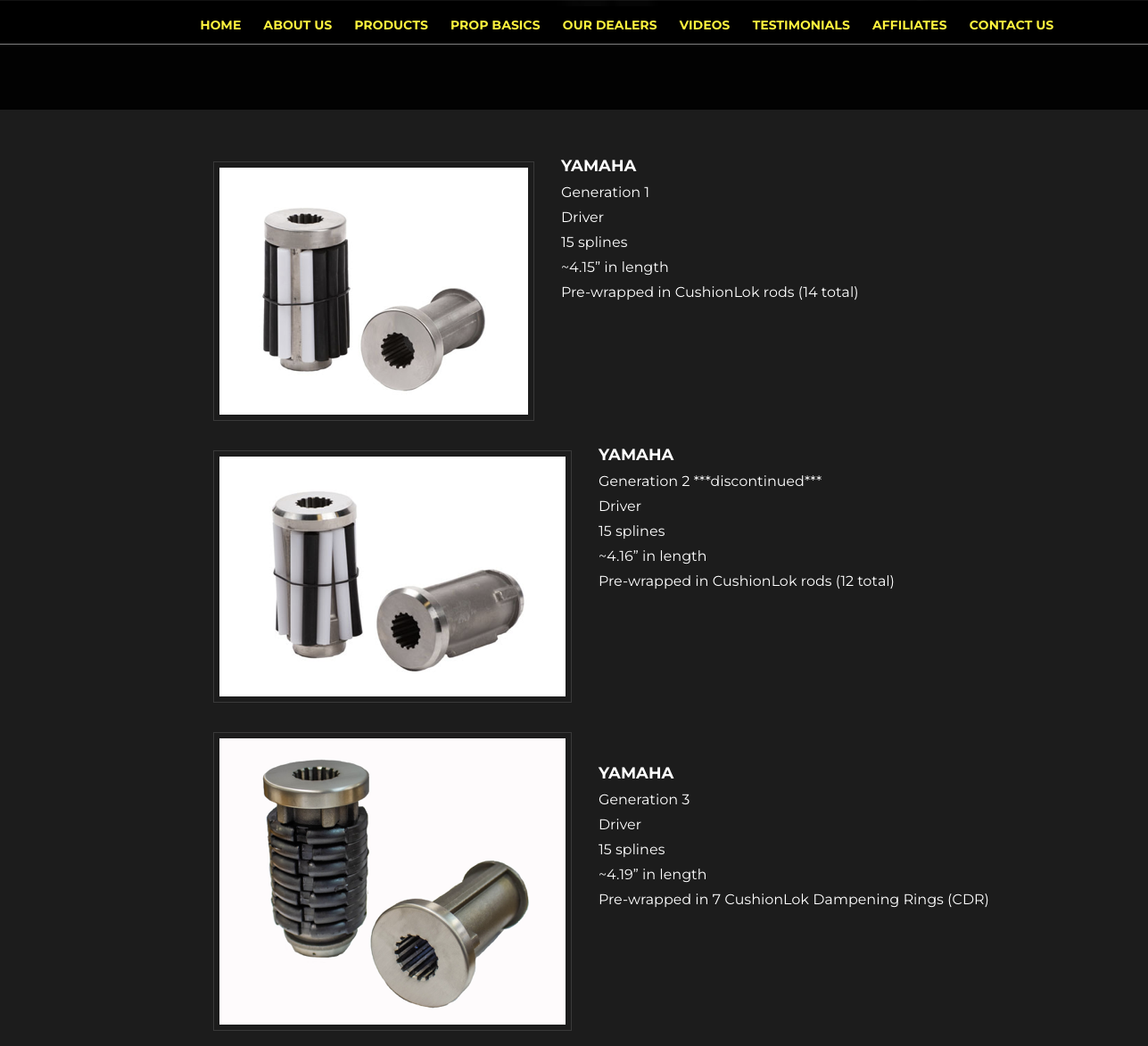
PowerTech makes two different types of cushion lok hubs. The Gen1 is the older style that uses rods. The Gen3 is the newer style that uses rubber rings.
The hub serves two purposes:
1) Shifting into and out of gear, reduces the "clunk" making shifting softer and quieter.
2) If you hit something in the water, the hub is designed to fail. This saves the lower unit gears and the propeller which are more expensive to repair.
A replacement cushion lok hub is less than $100 and takes a few minutes with basic tools (big hammer, "Thor") to repair. A lot less expensive than a prop or lower unit.
Worth checking:
My OFS4 prop, used in prop testing with PowerTech in 2024 had the Gen3 hub. This same OFS4 prop had the Gen1 hub when I went to SE Alaska.
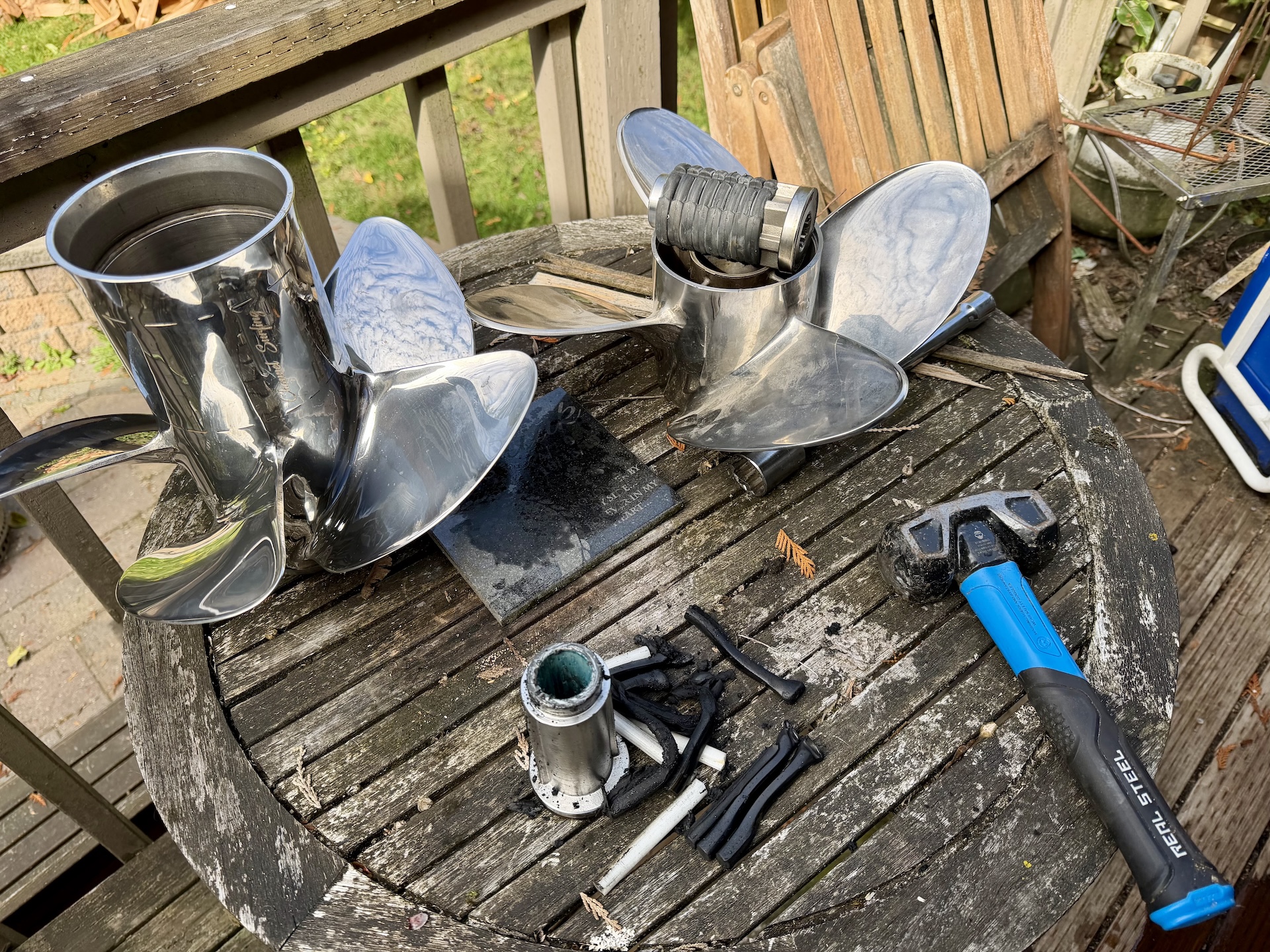
Both hub's work well, props are pictured below with the hubs removed illustrating the difference.
A replacement hub on the way from PowerTech and my spare SCE5-15 prop arrived yesterday!
I usually carry a spare prop onboard as It's not a matter of if I hit something, it's a matter of when.
Gen 1 (Rods) Cushion Lok hub
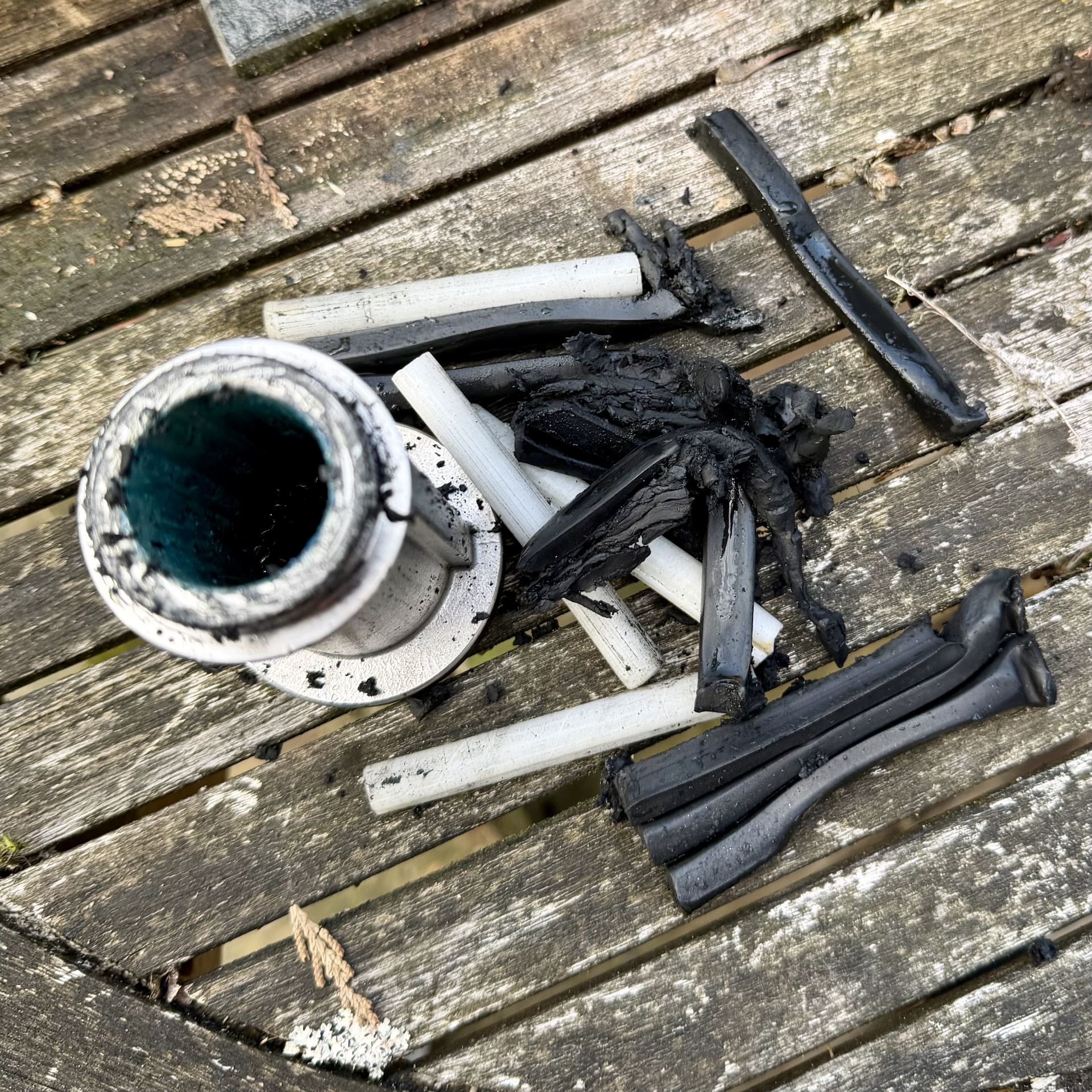
SCE5R15-EXT Channel Surfing edition with a Gen1 (rods) hub, shredded and melted. PowerTech OFS4R15 with a Gen3 (rings) cushion lok hub.
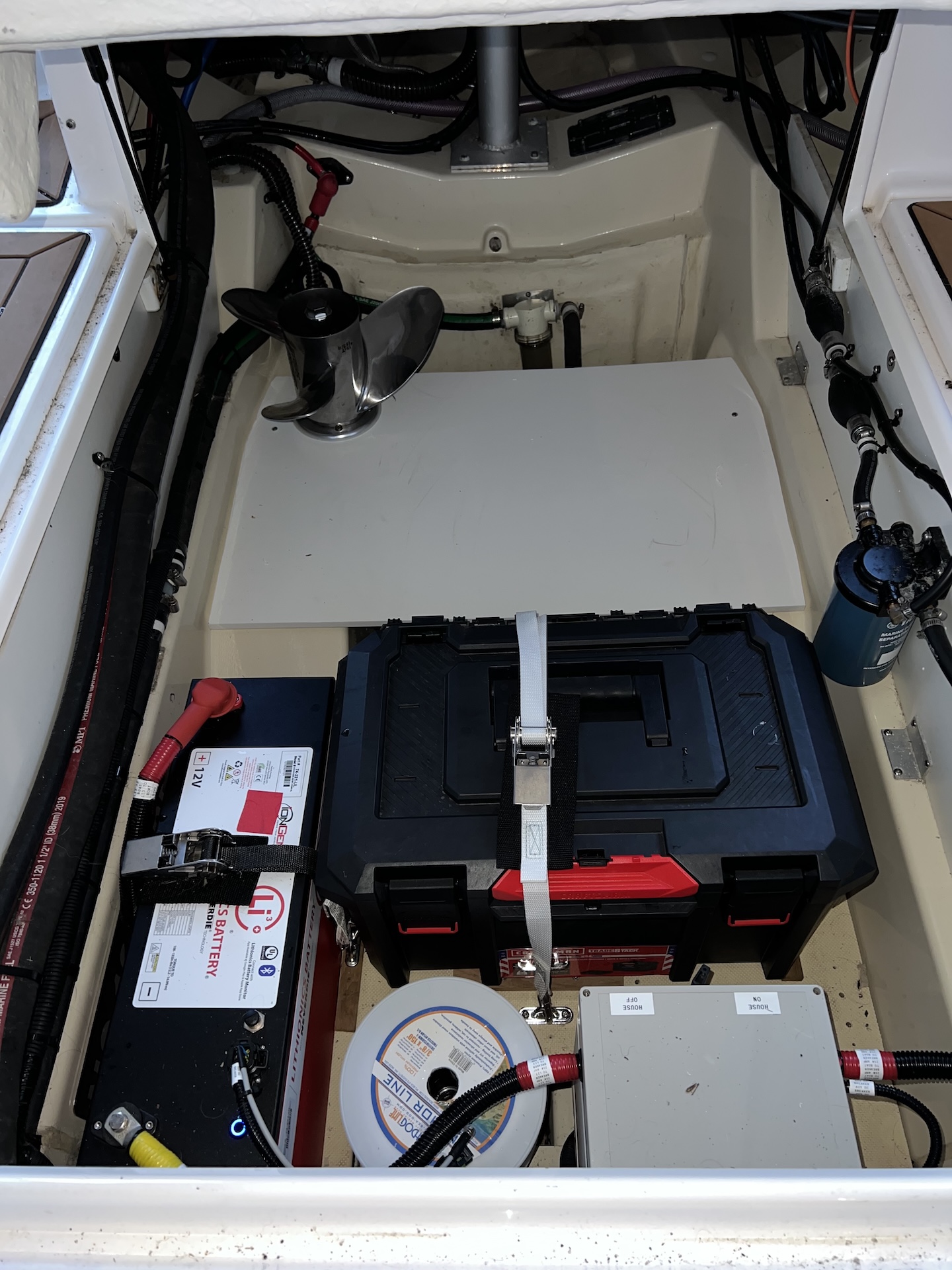
Spare prop holder, mounted to the deck. This is from 2023, SE Alaska, when I used my 3 blade as a backup. I now have a SCE5-15 Channel Surfing edition prop as my spare.
Our fuel economy dropped from 1.7+ mpg to 1.4 at cruise.
At WOT the engine hit 5,900 rpm at 33mph which caught my immediate attention.
It normally tops out at 5,700 rpm at 38mph.
Cruising speed was usually 4800 rpm, but had moved to 5300 rpm to maintain 28mph.
Higher RPM and lower speed means slip, a lot of slip. The power isn't making it into the water.
Totally unrelated, I had a PowerTech OFS5-15 prop to test on my boat. It actually performed better than I expected. Running the OFS5-15 showed me the engine was fine and the problem was in my SCE5-15 prop. I took off the prop, pressed out the Cushion-Lok hub and found black rubber rods were SHREDDED, some of them MELTED from heat. The blades were perfect, it ran smoothly with no vibration, and the hole shot was normal. I have at least 4 engine hours at cruising speeds running the boat this way.
Nothing felt wrong except the fuel burn.
What happened? Coming back from the Roche Harbor Rendezvous, we ran over a commercial fishing net at 28mph. That net slowed the boat down like a jet landing on an aircraft carrier when it grabs the tail hook. However, no fouling of the prop occurred, so after a brief stop we continued our journey home.
The change in data started that day. Coincidence? I can't prove this is what caused it, but it seems plausible. I think that the net grabbed the prop, slowing it down while the prop shaft kept turning under power which spun the hub, the net probably shredded, releasing the boat/prop clean.
PowerTech makes two different types of cushion lok hubs. The Gen1 is the older style that uses rods. The Gen3 is the newer style that uses rubber rings.
The hub serves two purposes:
1) Shifting into and out of gear, reduces the "clunk" making shifting softer and quieter.
2) If you hit something in the water, the hub is designed to fail. This saves the lower unit gears and the propeller which are more expensive to repair.
A replacement cushion lok hub is less than $100 and takes a few minutes with basic tools (big hammer, "Thor") to repair. A lot less expensive than a prop or lower unit.
Worth checking:
- Know your baseline WOT RPM, top speed, and mpg at cruise.
- If RPM goes up while speed goes down, suspect the hub before the engine.
- The prop should have "Generation 1" or "Generation 3" imprinted on the prop hub to indicate which cushion lok hub you have installed.
My OFS4 prop, used in prop testing with PowerTech in 2024 had the Gen3 hub. This same OFS4 prop had the Gen1 hub when I went to SE Alaska.
Both hub's work well, props are pictured below with the hubs removed illustrating the difference.
A replacement hub on the way from PowerTech and my spare SCE5-15 prop arrived yesterday!
I usually carry a spare prop onboard as It's not a matter of if I hit something, it's a matter of when.
Gen 1 (Rods) Cushion Lok hub
SCE5R15-EXT Channel Surfing edition with a Gen1 (rods) hub, shredded and melted. PowerTech OFS4R15 with a Gen3 (rings) cushion lok hub.
Spare prop holder, mounted to the deck. This is from 2023, SE Alaska, when I used my 3 blade as a backup. I now have a SCE5-15 Channel Surfing edition prop as my spare.
Last edited:

