R23 bow thruster anode question

Squid

Active member
Joined
Sep 23, 2018
Messages
27
Fluid Motion Model
C-242 C
Vessel Name
Working on it
Hi there tugnuts,

I’ll be hauling out our R23 next week for the Yamaha 100 hour service. Figured I’d address the anodes at the same time... can anybody tell me what type of thruster is installed? I imagine the zinc on it needs to be replaced and I’d like to arrange the parts ahead of time. Our mechanic “doesn’t do thrusters” so I’m kind of on my own on this.

Thanks for your insight in advance.

Unrelated photo of Vancouver harbour a few nights ago.
b4cfefd99aa54e4678d287f51babba2d.jpg


Sent from my iPhone using Tapatalk
 
You may check with RT about R23 thruster anode.... but you may find it does not require one. My R27/OB's bow thruster did not require one and the thruster was a Lewmar brand.
 
Barry is correct. There is no anode on the bow thruster. It is a Lewmar thruster I believe.

You do have the anodes on the trim tabs and another one on the bottom of the Yamaha motor mount and another at the base of the motor itself. The skeg is an anode.

Jim
 
Thank you Baz and Jim... appreciate the help!


Sent from my iPhone using Tapatalk
 
baz":2ezd7yq3 said:
You may check with RT about R23 thruster anode.... but you may find it does not require one. My R27/OB's bow thruster did not require one and the thruster was a Lewmar brand.

Just out of curiosity, how does it work that these types of thrusters don’t require zincs?


Sent from my iPhone using Tapatalk
 
Squid":1z1j7qtt said:
baz":1z1j7qtt said:
You may check with RT about R23 thruster anode.... but you may find it does not require one. My R27/OB's bow thruster did not require one and the thruster was a Lewmar brand.

Just out of curiosity, how does it work that these types of thrusters don’t require zincs?


Sent from my iPhone using Tapatalk

My presumption is that the Lewmar thruster is constructed so water does not contact any metal other than the SS washer and screw bolt used to secure the prop. If no metal is in contact with water then no need for an anode.

Note: the SS washer and screw bolt can exhibit weeping rust so that needs to be brushed and cleaned off periodically to allow the screw bolt to be removed when the prop needs replacing if it becomes damaged.
 
As already stated the Lewmar Thruster does not require a anode because the gear housing is polymer (composite). The area of concern is the unprotected nut and prop shaft both being Stainless Steel sitting in salt water. Even if the materials are 316 SS the treaded areas are prone to corrode and Gall. I personally would use a brass nut and washer.This has been the method of outboard manufactures for years and manufactures recommendations of inboard propeller shafts. Use a brass nut (Manganese Bronze) on a stainless steel prop shaft. It reduces thread contact corrosion and helps reduce thread Galling. I would assume using a stainless nut is a cost savings for Lewmar. If using stainless to stainless in a underwater application a sealant type loctite (Blue 242 or 243) should be used to help insulate the thread to thread contact nut to shaft. Contrary to belief it is not only to lock the nut. It is to seal the water out of the thread contact area to reduce corrosion and galling.
 
BB marine":bxklkmu0 said:
As already stated the Lewmar Thruster does not require a anode because the gear housing is polymer (composite). The area of concern is the unprotected nut and prop shaft both being Stainless Steel sitting in salt water. Even if the materials are 316 SS the treaded areas are prone to corrode and Gall. I personally would use a brass nut and washer.This has been the method of outboard manufactures for years and manufactures recommendations of inboard propeller shafts. Use a brass nut (Manganese Bronze) on a stainless steel prop shaft. It reduces thread contact corrosion and helps reduce thread Galling. I would assume using a stainless nut is a cost savings for Lewmar. If using stainless to stainless in a underwater application a sealant type loctite (Blue 242 or 243) should be used to help insulate the thread to thread contact nut to shaft. Contrary to belief it is not only to lock the nut. It is to seal the water out of the thread contact area to reduce corrosion and galling.

Thanks for the info, this is very helpful.


Sent from my iPhone using Tapatalk
 
So, had the service done and going into it with a little knowledge courtesy of the ‘nuts was very helpful, thank you.

One thing did come up was the fact that there were no anodes on the trim tabs whatsoever. So it looks like I’ll be installing some.

I understand that this is a pretty easy procedure, and I’m a pretty handy guy albeit with little boating experience.

So, any trick to drilling under the water? I can surely keep the drill above the water line, just have the drill bit in the water. Is there any marine weirdness to be aware of? I’d rather not haul the boat out again and save the 250 bucks.

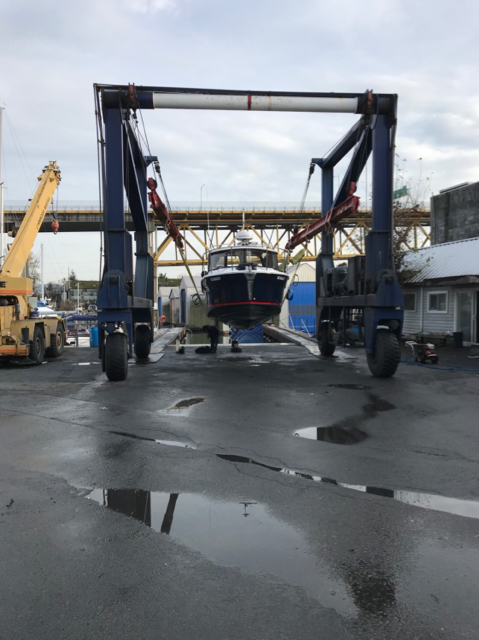
Related photo of the boat in the sling on the hard.

Thanks!

aedcfdba55810d1b0a1ce61e0044b7dd.jpg


Sent from my iPhone using Tapatalk
 
Squid":3sl58nay said:
So, had the service done and going into it with a little knowledge courtesy of the ‘nuts was very helpful, thank you.

One thing did come up was the fact that there were no anodes on the trim tabs whatsoever. So it looks like I’ll be installing some.

I understand that this is a pretty easy procedure, and I’m a pretty handy guy albeit with little boating experience.

So, any trick to drilling under the water? I can surely keep the drill above the water line, just have the drill bit in the water. Is there any marine weirdness to be aware of? I’d rather not haul the boat out again and save the 250 bucks.

Related photo of the boat in the sling on the hard.

Thanks!

aedcfdba55810d1b0a1ce61e0044b7dd.jpg


Sent from my iPhone using Tapatalk
If you were to use this type no drilling would be required. https://www.boatzincs.com/bennett-trim- ... gJG1PD_BwE
 
For my education, why are you hauling a R23 in lieu of using a boat ramp? I was thinking that a boat of this size would normally be loaded and offloaded at a ramp.
 
Brian B":3dvedv4k said:
If you were to use this type no drilling would be required. https://www.boatzincs.com/bennett-trim- ... gJG1PD_BwE

I believe Ranger uses Lenco Trim Tabs now. If so the Bennett style anodes would not work. I would wait until the next time the boat is out of the water to drill and install tab anodes. I use titanium coated bits and cutting oil to cut thru 304 SS. Start by drilling 1/8" pilot and then drill to mounting screw size.
 
I can haul roundtrip, in an out, for $75 at Cap Sante in Anacortes. For that amount I don't have to put the trailer in the water, don't have to deal with launch ramp Yahoo's, don't have to worry about doing the Ranger Bump. Well worth the cost to haul in my opinion.

Jim
 
Rwnorton":261jd76y said:
For my education, why are you hauling a R23 in lieu of using a boat ramp? I was thinking that a boat of this size would normally be loaded and offloaded at a ramp.

Well, I don’t have a trailer. Nor anywhere really to work on it on a trailer. Nor a vehicle that can tow it. Around these parts land and space is at a premium and everything is crazy expensive, including the limited services available for boat maintenance it would seem.


Sent from my iPhone using Tapatalk
 
BB marine":126l0uxz said:
Brian B":126l0uxz said:
If you were to use this type no drilling would be required. https://www.boatzincs.com/bennett-trim- ... gJG1PD_BwE

I believe Ranger uses Lenco Trim Tabs now. If so the Bennett style anodes would not work. I would wait until the next time the boat is out of the water to drill and install tab anodes. I use titanium coated bits and cutting oil to cut thru 304 SS. Start by drilling 1/8" pilot and then drill to mounting screw size.

I think I’ll do just that, wait for the next haul out. Thanks for the advice...


Sent from my iPhone using Tapatalk
 
Back
Top