
briandunnington
Well-known member
- Joined
- Sep 14, 2020
- Messages
- 139
- Fluid Motion Model
- C-242 C
- Vessel Name
- Salty Lass
I have been slowly planning and working towards our solar upgrade on The Salty Lass and finally finished it up. I took a lot of inspiration from @Submariner and the upgrades they did to Channel Surfing, but made a few changes to suit our different boat and different power usage.
When we first got the boat, the first upgrade I did was to add the Victron BMV-712 battery monitor. That was great for learning how much electricity we generally used. More recently, I also upgraded to the Victron 100/30 MPPT solar controller - I was still using the stock solar panel, but was preparing for the new panels.
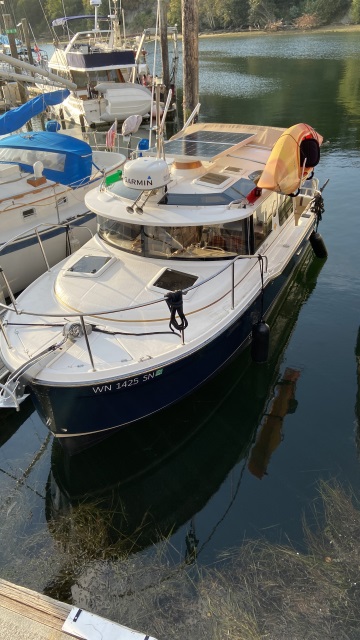
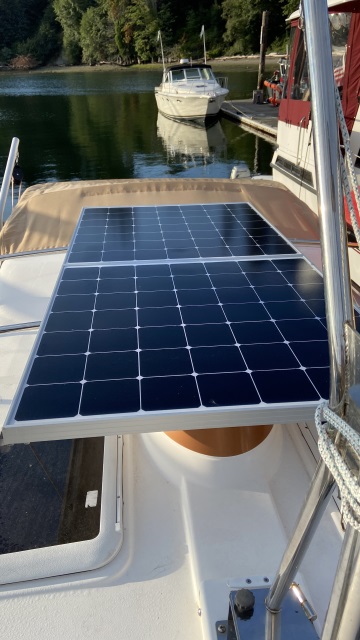
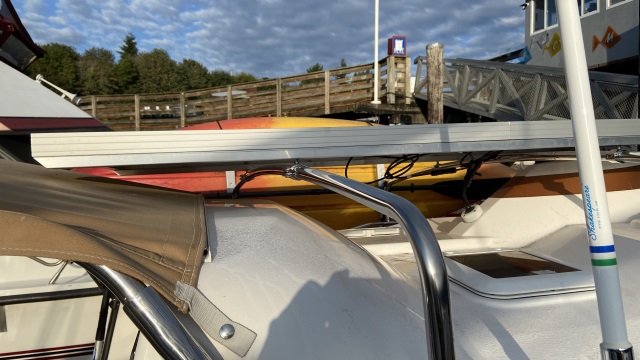
The stock panel on our 2018 R23 is a paltry 90 watts, which didnt even fully keep up with the refrigerator running. We are not super heavy electrical users, but I wanted to make sure we would be energy independent, so I decided to upgrade to 350 watts via two 175w Custom Marine Products panels. The 175w panels are square shaped, which would make them take up a lot of space if mounted side-by-side, so I decided to mount them front-to-back, essentially making a big rectangle. This allowed me to keep the sides of my rack free for other uses. In order to mount them, I used some aluminum channel strut (aka Unistrut) - I bolted the two panels to each other and then to the channel strut to make one solid unit. I chamferred the ends and used the Gemini rail mounts to attach to the roof racks.
I am really happy with the way it all turned out. It just so happened that @Submariner was visiting the Langley marina the day I got these installed and I think I even got his seal of approval =)
Here are some of the numbers from yesterday - it was pretty sunny, but there was some smoke in the air and it is the tail end of September in the PNW. For reference, I had never seen more than about 60 watts from the old panel on the brightest sunniest day with the old panel.
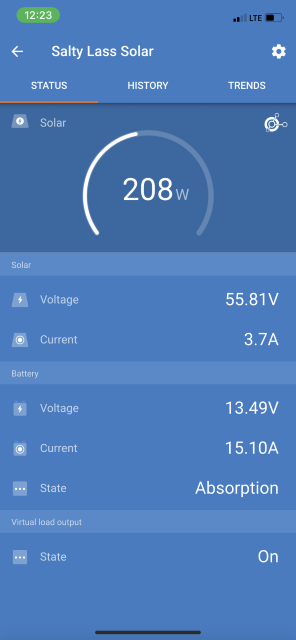
(NOTE: It is obvious in hindsight, but one thing I learned the hard way: the MPPT controller can output up to 30 amps (that is why it is called 100/30), so the fuse between the controller and the battery needs to be sized accordingly. The stock configuration included a 10 amp fuse and my old PWM controller and 90w panel never got close to that. With the new panels and controller, I blew the fuse when the sun was out and energy was flowing into the battery. Since my wiring was already 10AWG, I replaced it with a 30amp fuse and all has been fine since,)
When we first got the boat, the first upgrade I did was to add the Victron BMV-712 battery monitor. That was great for learning how much electricity we generally used. More recently, I also upgraded to the Victron 100/30 MPPT solar controller - I was still using the stock solar panel, but was preparing for the new panels.
The stock panel on our 2018 R23 is a paltry 90 watts, which didnt even fully keep up with the refrigerator running. We are not super heavy electrical users, but I wanted to make sure we would be energy independent, so I decided to upgrade to 350 watts via two 175w Custom Marine Products panels. The 175w panels are square shaped, which would make them take up a lot of space if mounted side-by-side, so I decided to mount them front-to-back, essentially making a big rectangle. This allowed me to keep the sides of my rack free for other uses. In order to mount them, I used some aluminum channel strut (aka Unistrut) - I bolted the two panels to each other and then to the channel strut to make one solid unit. I chamferred the ends and used the Gemini rail mounts to attach to the roof racks.
I am really happy with the way it all turned out. It just so happened that @Submariner was visiting the Langley marina the day I got these installed and I think I even got his seal of approval =)
Here are some of the numbers from yesterday - it was pretty sunny, but there was some smoke in the air and it is the tail end of September in the PNW. For reference, I had never seen more than about 60 watts from the old panel on the brightest sunniest day with the old panel.
(NOTE: It is obvious in hindsight, but one thing I learned the hard way: the MPPT controller can output up to 30 amps (that is why it is called 100/30), so the fuse between the controller and the battery needs to be sized accordingly. The stock configuration included a 10 amp fuse and my old PWM controller and 90w panel never got close to that. With the new panels and controller, I blew the fuse when the sun was out and energy was flowing into the battery. Since my wiring was already 10AWG, I replaced it with a 30amp fuse and all has been fine since,)


