
IslandHopper
Active member
- Joined
- Feb 25, 2025
- Messages
- 25
- Fluid Motion Model
- R-27 (Outboard)
- Hull Identification Number
- FMLT2742J425
- Vessel Name
- Tugether Atlas
- MMSI Number
- 316056612
After a run on the boat last week, we were running the inverter while docked, doing our routine cleanup and running the AC and various other loads totaling around 180 amps. While I was flushing the drains and scuppers with the hatches open and I started to smell the familiar scent of burning wire, looking over at the port side hatch I saw a wiff of smoke. In a panic we shut everything down with fire extinguishers ready and I started feeling wires and visually tracking down where the smoke came from, which was the Inverter Fuse Block that had melted
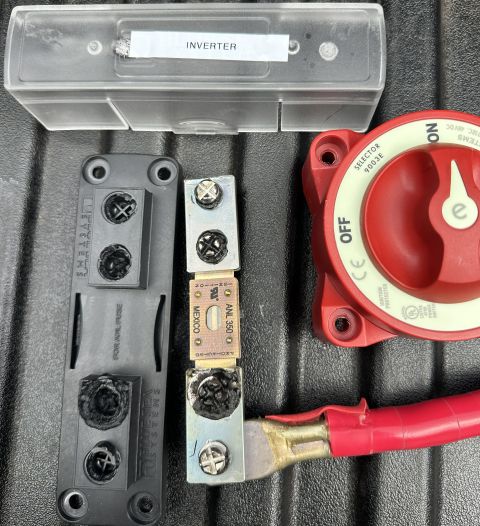
After some troubleshooting, I determined that the 350A ANL Fuse for the Inverter was installed incorrectly, with the stainless washer in between the fuse and the buss. I won’t get into the technical details (unless someone wants), but in this configuration the stainless washer adds resistance, which is heat, which can lead to a fire.
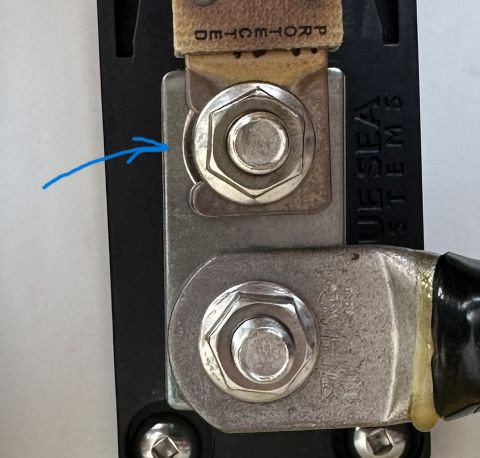
Upon further investigation, I noticed that the Main Fuse and connections to the Main Buss also had similar incorrect installations.
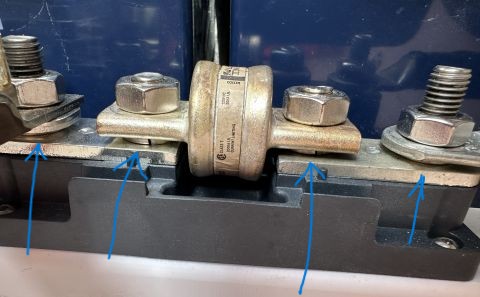
I’d just like to suggest to everyone – next time you are on your boat (no matter what make or model), have a quick look at the fuse connections and all buss connections. If there is a washer in between the cable connector and buss – fix it or take it to a dealer that will install it correctly. Look up the manufacturers’ model for the fuse and buss blocks and ensure they are installed and torqued to proper specifications.
Our boat is a 2025 R27 LE with a 640A Lithium House battery bank. The Blue Sea Systems ANL fuse block has a Maximum torque spec of 107 in Lbs. The BEP Main buss Recommended torque is 190 in lbs (15.9 FtLbs). Please verify your specific models with manufactures specifications.
After some troubleshooting, I determined that the 350A ANL Fuse for the Inverter was installed incorrectly, with the stainless washer in between the fuse and the buss. I won’t get into the technical details (unless someone wants), but in this configuration the stainless washer adds resistance, which is heat, which can lead to a fire.
Upon further investigation, I noticed that the Main Fuse and connections to the Main Buss also had similar incorrect installations.
I’d just like to suggest to everyone – next time you are on your boat (no matter what make or model), have a quick look at the fuse connections and all buss connections. If there is a washer in between the cable connector and buss – fix it or take it to a dealer that will install it correctly. Look up the manufacturers’ model for the fuse and buss blocks and ensure they are installed and torqued to proper specifications.
Our boat is a 2025 R27 LE with a 640A Lithium House battery bank. The Blue Sea Systems ANL fuse block has a Maximum torque spec of 107 in Lbs. The BEP Main buss Recommended torque is 190 in lbs (15.9 FtLbs). Please verify your specific models with manufactures specifications.

